



Metrology Trends 2026
First, let’s talk about business
Metrology is leading manufacturing processes through faster feedback, increased automation, and more deep and comprehensive data. Just look at the numbers in the Market to tell the story: industrial metrology is expected to grow from USD 14.31 billion in 2025 to USD 19.03 billion by 2030, reflecting a compound annual growth rate of 5.9%.
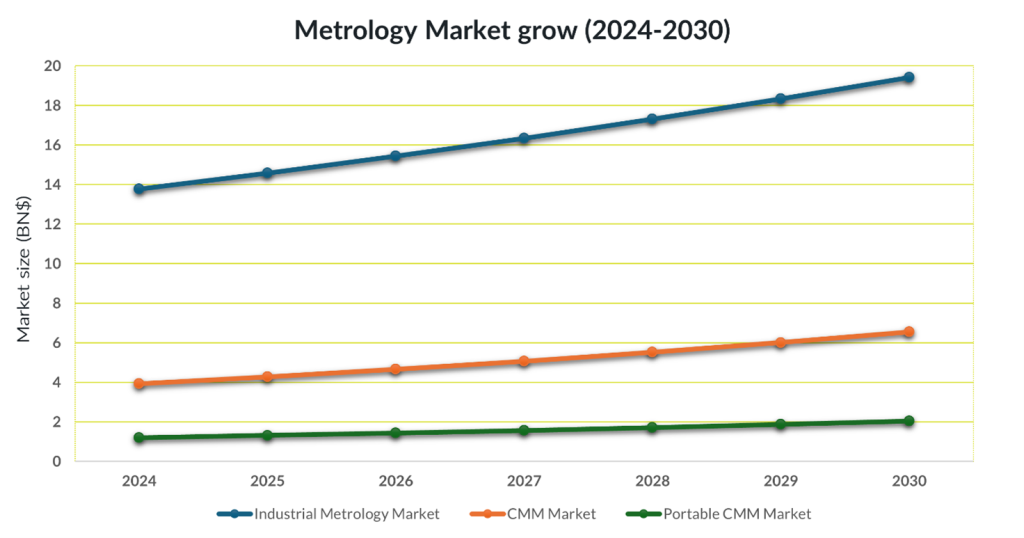
Market growth embraces all major segments (optical metrology, DME and software, portable CMMs, CMMs): in 2024 is valued at USD 13.76 billion and is projected to grow to 15.43 billion by 2026.
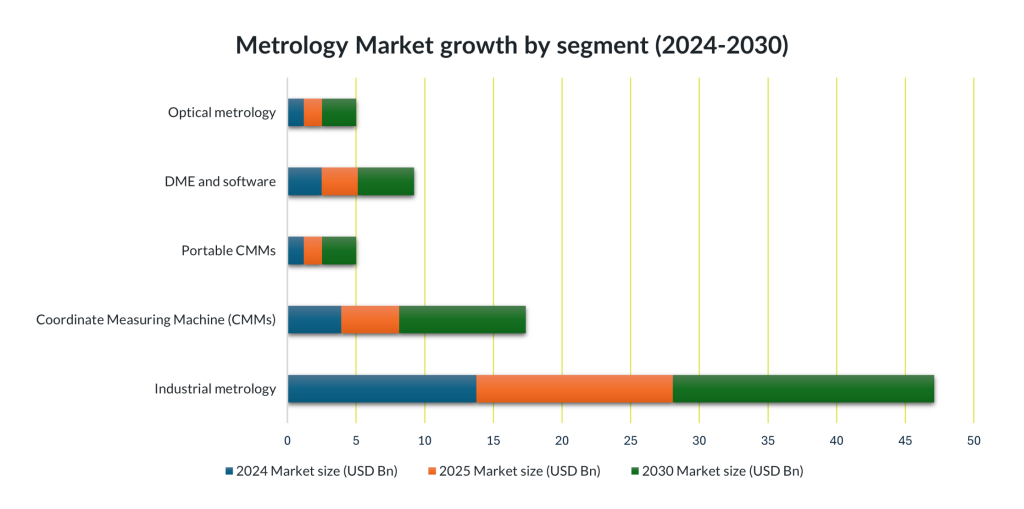
This growth is driven by the integration of IIoT sensors, high-quality demands in precision manufacturing, and the increasing complexity in sectors like automotive, as electric-vehicle production continues to grow year by year.
Metrology in 2026: from measuring parts to steering the manufacturing processes
We can no longer see metrology as the “simple” quality checkpoint at the end of the production process (end-of-line control): it’s becoming a real-time capability, embedded into every manufacturing decision, where measurement data is expected to flow quickly from the shop floor to engineers, quality teams, and the increasing number of automated systems, all connected.
So, what’s really changing the metrology landscape in 2026? We have decided to track some key trends that shape this year and next. Let’s see together:
1) From offline verification to inline control
One of the most defining trends we will see in 2026 is the increasing transition from isolated inspection to inline metrology, where inspections take place during or immediately after production, without interrupting the process and potentially correcting them (in-process and on machine verification).
Inline metrology provides continuous feedback, detects deviations more quickly, and enables faster decisions.
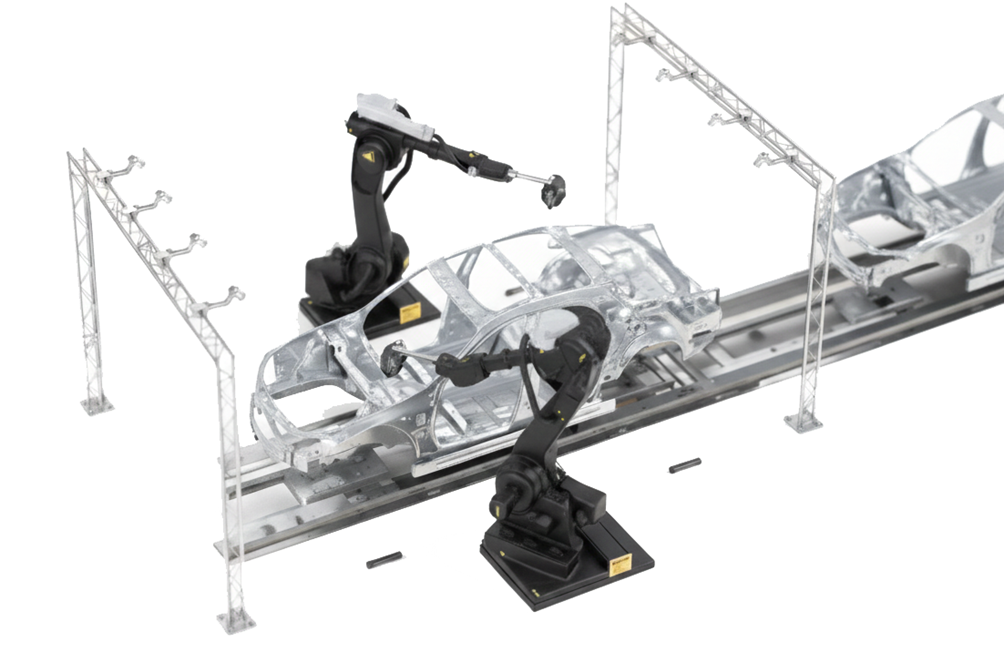
Moreover, inline metrology fits naturally into smart manufacturing environments, where continuous data collection helps detect defects sooner and reduce downtime (see SPC). In many plants in the automotive and instustrial machinieri we’re seeing a push towards closed-loop control, in which inspection data automatically triggers upstream corrections.
2) Connectivity and IoT are becoming (even more) essential
If metrology is expected to influence production, the measurement ecosystem must be all connected and ready. One of the market drivers is the rising integration of IoT sensors into industrial metrology solutions.
Dashboards to monitor metrology data are fundamental, but we think that the real work happens behind the scenes: achieving traceability, developing scalable data pipelines, and merging inspection results with process signals that can be difficult to capture or interpret.
In practice, this means more attention on environmental monitoring, instrument status, and the full context around the inspections (so not the only measurement itself).
3) Automation pushes metrology software to evolve
As inspection volume grows, the bottleneck often shifts to programming time, operator workload, and reporting speed.
This is where software becomes a competitive advantage. CMM hardware capability is relevant, but in the years ahead, the key differentiator will often be how quickly teams can deploy and standardize inspection routines across various cells, shifts, and sites. The choice of the right CMM software can be crucial to address the challenges in automation manufacturing.
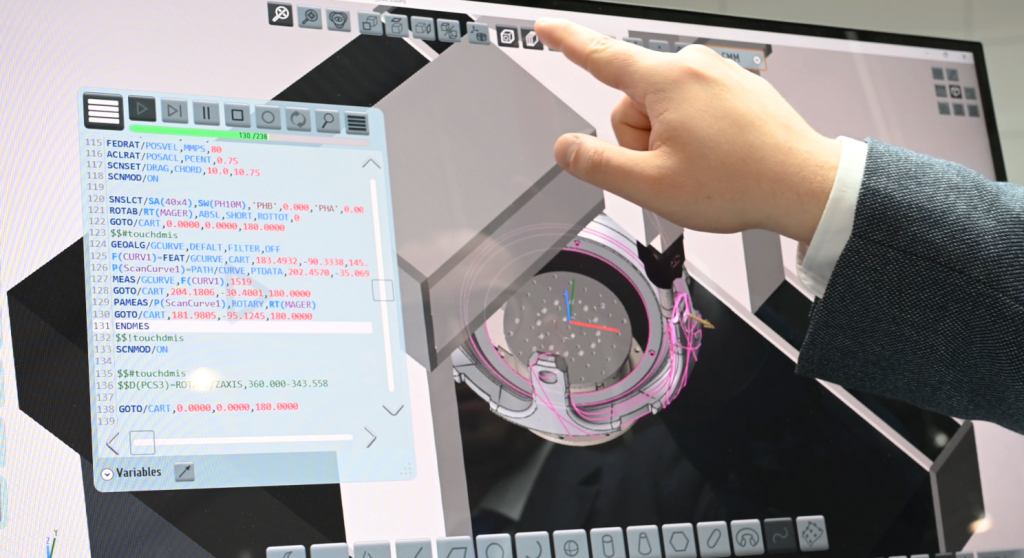
Modern metrology software must evolve into easy-to-use tools that remove friction instead of adding it. They must be intuitive to operate, fast to learn, and consistent to run. Good usability delivers tangible ROI, shortening the learning curve when onboarding new operators, reducing dependency on a few programming “experts”, and keeping inspection execution predictable.
Just as importantly, it makes day-to-day operations easier to control and reallocate when workload fluctuates, so companies can scale capacity up or down without losing traceability, standardization, or reporting speed.
4) Data density rises with 3D metrology
Another structural trend is the growing use of 3D data across modeling and analysis applications, which is highlighted as a growth driver for CMM adoption and R&D investment.

More data points and denser measurement strategies can improve confidence in evaluating form and complex geometry, but they also demand efficient processing, reporting, and decision logic.
This is one reason many manufacturers are rethinking what “inspection results” should look like: not only pass/fail, but actionable insight, linked to root cause hypotheses, process drift, and predictive signals.
5) Multi-sensor strategies expand: CMMs, optical, and scanning work together
The “one-size-fits-all” measurement approach keeps losing ground. Manufacturers are blending tactile probing, scanning, and optical solutions to match the geometry, surface, tolerance, and cycle-time constraints of each feature set.
This is especially visible in automotive and aerospace, where freeform surfaces, lightweight materials, and tight tolerances coexist in the same assembly. Instead of debating which technology to prefer, the focus shifts to a multi-sensor strategy: how quickly teams can combine sensors, align datasets, and produce a single coherent report that production can use.
The challenge moves upstream into one-software-solution: merging point clouds and discrete points, managing alignments, and ensuring consistent evaluation logic across different measurement sources.
Where is metrology headed?
Metrology is evolving from a specialized quality control system into a connected and integrated decision engine for manufacturing. Inline control, richer 3D data, stronger automation, easy-to-use CMM software, and tighter digital integration are pushing inspection to a new level of the production process, where real-time data becomes the key to success.
In this year and in the years ahead, the companies that gain the most will be the ones that treat inspection data as operational intelligence: structured, traceable, and fast enough to drive results.
Don’t forget to subscribe to our newsletter!